Together for Change: Partnering to Secure a Girl’s Future in Kenya.
Article Published in Collaboration with Women’s Empowerment Coalition (WECO) and Tepesua CBO
In Kenya, around a million students each year are of high school-ready age, yet many of them cannot pursue quality education due to the country’s fee-based structure. The national poverty rate hovers around 40%* of the country’s total population, making school fees an insurmountable barrier to students continuing their education. This, along with other societal demands, results in many young Kenyans having to end their educational journey after primary school. For girls, this problem is even more pronounced, especially in some rural communities, where girls are rarely offered the opportunity to go to school and face severe challenges such as FGM and early marriage.
To help combat these problems, organizations like the Education For All Children (EFAC) and Tepesua CBO provide primary school students with a pathway to success through academic scholarship and critical personal and professional development programs. EFAC provides scholarships for high school and post-secondary education for high-achieving students who otherwise would not have the opportunity to continue their education. EFAC students participate in personal and professional development programs throughout their 8-year journey that keep them on track to achieve their career dreams. Through a robust recruitment process and network of school and community partners, EFAC strives to assist as many primary school students from across Kenya as possible in applying to become an EFAC Scholar—a life-changing opportunity.
On the other hand, the Tepesua CBO was founded by Hellen Nkuraiya, who recognized the dire need to protect and educate girls in her community. Hellen and her team provide a safe space for girls to get an education and resources for young women and widows who experienced early marriage.
Partnerships like the one between the Tepesua CBO and EFAC are essential to ensure students in Kenya can thrive. One story of success is Wuama Tongoyo, a young man Hellen met when he was a young boy, tending to his grandparents' livestock instead of attending school. She offered him an opportunity to go to school, an offer that changed the course of his life. Upon completing primary school, he was awarded an EFAC scholarship. Now a university graduate, he is the first of 22 EFAC Scholars from Tepesua schools to complete the EFAC program. Wuama earned a degree in public administration and returned to his community to work with the Tepesua CBO and help create more opportunities for young girls and boys.
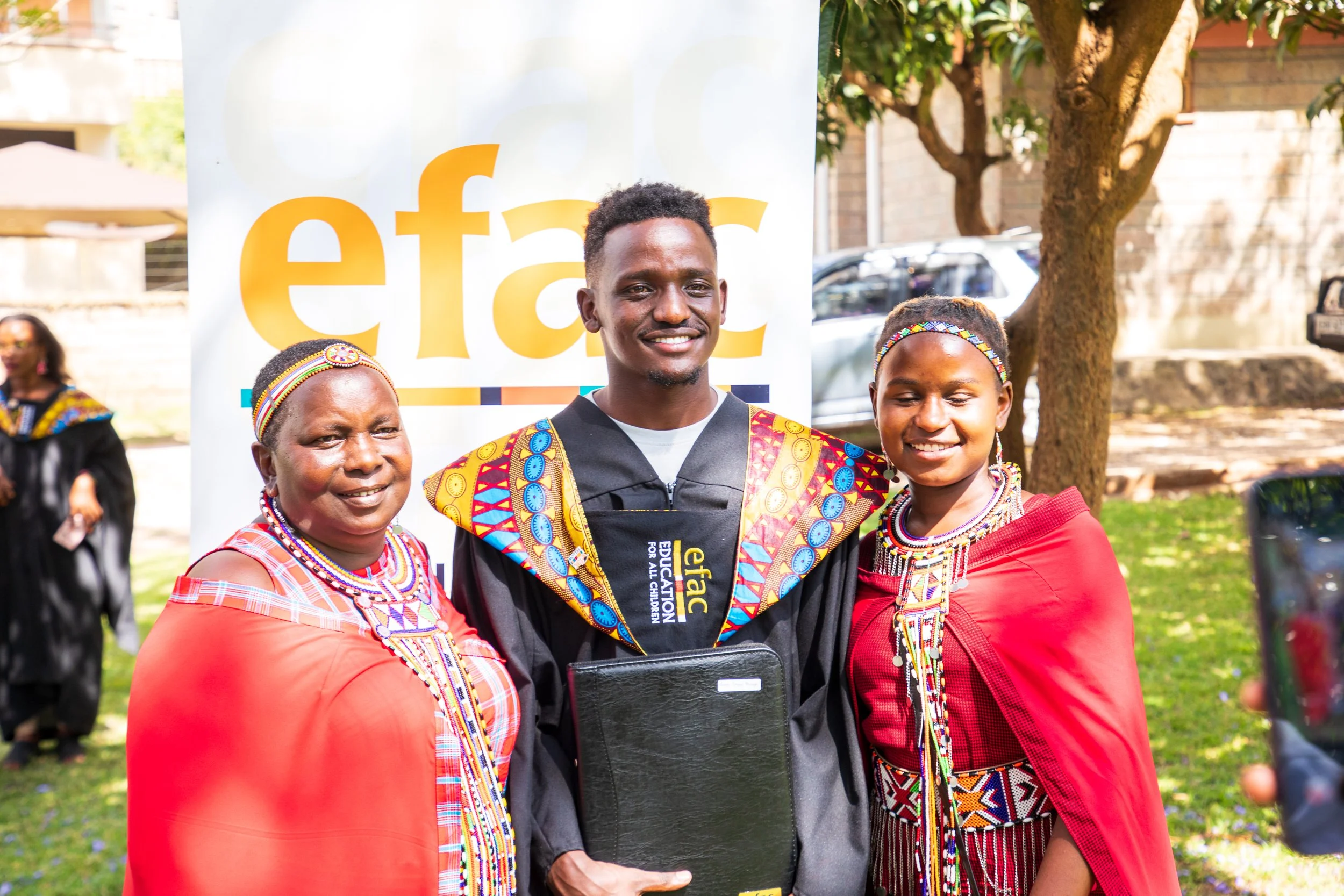
Wuama Nkuraiya (Centre) with Hellen (left) of Tepesua CBO and Victoria (Right), another beneficiary of Tepesua CBO
Partnering to Secure a Girl's Future!
Both EFAC and Tepesua CBO have the privilege of working with the Women's Empowerment Coalition (WECO). WECO partners with grassroots community leaders to support underserved women and girls by enhancing their educational and economic opportunities. In collaboration with local partners, WECO co-creates projects that directly benefit women and girls globally (currently in Kenya, Costa Rica, India, Peru, and Cambodia).
WECO is working with both Tepesua CBO and EFAC through sponsorship and mentorship support so students from Tepesua can receive quality education beyond primary school. Building a strong ecosystem of partners with expertise, commitment, and cooperation makes this critical support possible. Together, we are bridging gaps so more students have access to quality education, helping improve their lives and their communities—one scholar at a time.
Chit Chat with the Girls
We sat down with some of the students from Tepesua - Dorcas, Juliana, and Stella to interview them about their educational journeys. Read on to learn more about their perspectives and passions, and what it means to be an EFAC Scholar.
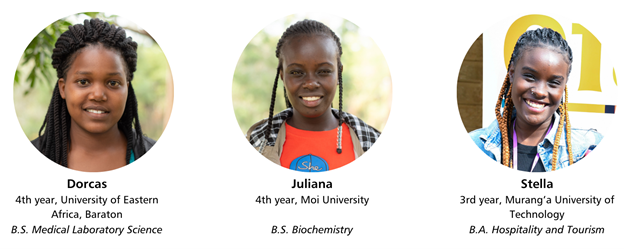
Some of EFAC Scholars from the Tepesua Community
How did EFAC’s program help you adjust from primary school and succeed as a young student?
Stella: EFAC’s program provided essential support and resources that helped me adjust to school by offering mentorship, academic assistance, and a nurturing environment. This helped me build my confidence, develop skills, and foster a sense of community, which made a significant difference in my life.
Juliana: First of all, EFAC has fully paid my school fees since I joined the program in 2017. In addition, I have received mentorship, come to understand the importance of educating girls, and learned about things like self-awareness, personal development, reflecting on dreams and goals, a positive mindset, and financial management.
What challenges did you face at the start, and how did the program support you in overcoming them?
Dorcas: Coming from the village, I faced difficulty in interacting with people from different places and of different statuses. I didn’t have exposure to the current affairs of the evolving world. EFAC played an important role in fostering the confident individual I am today by always giving me chances to interact with others and express myself through storytelling during workshops.
Were there any unique challenges you faced as a woman during the transition after primary school?
Juliana: I had a lot of self-doubt and low confidence because there are internalized beliefs that girls are not meant for higher education. The cultural expectation was that girls are to marry instead of continuing school. I also had a fear of struggling academically when going to a new environment in high school.
Can you share a moment when you realized the program made a significant difference in your academic or personal life?
Stella: One specific moment that might stand out is when the program facilitated a mentorship session that addressed personal challenges. For example, a mentor shared their own experiences and offered practical advice on managing academic stress. This not only provided valuable insights but also made me feel understood and supported, leading to improved confidence and performance in school. Such moments turned out to be transformative to me.
In what ways has your education helped you overcome traditional expectations or redefine roles within your community?
Dorcas: My education has changed my perspective on the roles of a woman. I have risen above other boys and girls in the society, and that has given me the capacity to do even the roles perceived to be for men. I have been able to resist the stereotype that women cannot own anything and are only a source of wealth to the family once they are married.
Stella: My education has played a crucial role in helping me overcome traditional expectations and redefine roles within my community. By gaining knowledge and skills, I've been able to challenge stereotypes and demonstrate that women can excel in various fields, including modeling. Education has empowered me to advocate for cultural exchange and local fashion, inspiring others to see the value in pursuing their dreams despite societal pressures. Through my journey, I hope to encourage other young women to break barriers and embrace their potential.
Juliana: Education has provided me with an alternative to early marriage by opening doors to a career and financial independence. I am now able to advocate against child marriage and FGM, helping to shift community attitudes.
Which skills or opportunities that you have gained in the program have been most valuable in your development?
Stella: The skills I gained in the program that have been most valuable in my professional development include effective communication, networking, and project management. These skills have enabled me to connect with industry professionals, collaborate on projects, and showcase the beauty and culture of different destinations through my work.
Juliana: As a biochemistry student in university, EFAC has granted me an opportunity to earn an additional certification to study data science to boost my career. Also, through EFAC, I’ve acquired the computer skills needed in every career in today’s world.
If these programs weren’t available to you, how do you think your life might be different today?
Dorcas: Looking at my family background, there are high chances that I wouldn’t be close to graduating university, or wouldn’t have even joined campus. Possibly, I’d be married off.
Juliana: I wouldn’t be able to access quality education. I would have probably gotten married and had several kids by now.
What advice do you have for young girls from your community who are considering applying to become an EFAC Scholar?
Dorcas: Be ready to face every challenge in life with resilience and aspire to be a woman of value and a beacon of change in your community. EFAC is there to back you up!
Stella: For young girls from my community applying to become an EFAC Scholar, I would advise them to be authentic and confident in their applications. Share your unique story and passions, especially how you want to make a difference in the community. Don’t be afraid to express your dreams and the impact you wish to create. Remember, this program is a chance to grow, so embrace the opportunity and be open to learning from others. Your voice matters, and you have the potential to inspire change.
To wrap it up…
The EFAC - Tepesua CBO partnership, and powered by WECO, is at the heart of changing a community. Our days are filled with so much joy knowing that another girl is beating the odds to become a changemaker.
*The Kenya Poverty Report, Based on the 2022 Kenya Continuous Household Survey, Kenya National Bureau of Statistics